


Inside the World of Canadian Genealogists Working Hard to Uncover Family Histories
A family story can disappear in one generation. A surname changes spelling. A birth record goes missing. A grandparent’s memory fades before anyone thinks to ask the next question. That is the quiet race many researchers face, and it explains why Canadian genealogists are working hard across archives, graveyards, libraries, kitchen tables, and online databases to rebuild the lives of people who came before.
Genealogy in Canada carries a special kind of difficulty. The country’s records stretch across provinces, territories, languages, faith traditions, immigration waves, and colonial systems. A search might begin with a marriage certificate in Ontario, move to a ship record in Halifax, pass through a parish book in Quebec, and end with a homestead file from the Prairies.
The work is patient, detailed, and often emotional. It is part investigation, part historical research, and part care for people whose names nearly slipped out of reach.
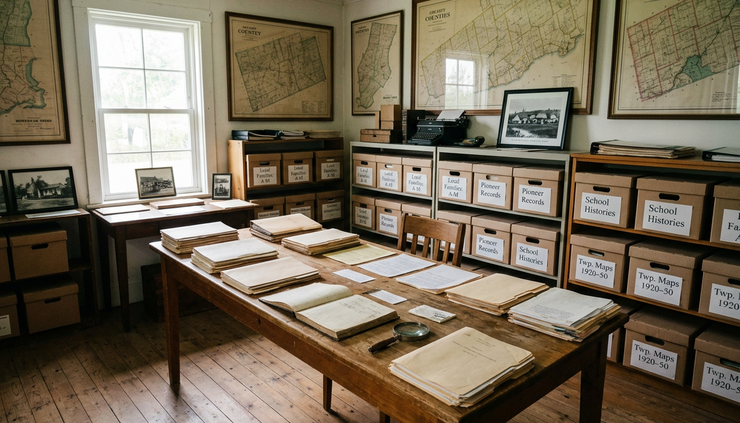
Genealogy in Canada begins with a question that rarely stays simple
Most family history searches start with something small.
A name on the back of a photograph. A rumor about an ancestor from Scotland. A family Bible with dates written in fading ink. A passenger story repeated so often that nobody knows which parts are true.
The first task is to turn that clue into a testable question. A good genealogist does not simply ask, “Where did my family come from?” The better question is more focused.
Who was the woman listed as “Mary B.” in the 1911 census?
Did the family arrive before or after Confederation?
Was the farm owned, rented, or granted?
Which church recorded the baptism?
Why did one branch move west while another stayed behind?
That shift matters. A broad family story can lead anywhere. A clear question gives the search a path.
Canadian research often depends on following a person through many kinds of records, not just one source. Census pages, church registers, land grants, wills, obituaries, military files, naturalization papers, cemetery inscriptions, and local newspapers can each add one piece.
None of these records tells the whole story by itself. A census might give an age that is off by several years. A headstone may use a nickname. A marriage record may list parents from memory, and that memory may be wrong. The skill lies in comparing sources and judging which details hold up.
This is where the work becomes less like collecting names and more like building a case.
The records are scattered across languages, borders, and systems
Canadian genealogy is shaped by movement. Families moved between provinces, crossed the U.S. border, arrived by ship, served in wars, joined churches, left churches, changed languages, and sometimes changed names.
That movement leaves a paper trail, but not always in one place.
Provincial records do not all work the same way
Canada does not have one single civil registration system that covers every person in the same way from the same starting date. Birth, marriage, and death records are handled by provinces and territories, and access rules vary.
That means a researcher may need to understand:
Which province held the event at the time
When civil registration began in that place
Whether privacy rules limit access
Whether church records fill gaps before government records
Whether boundary changes affected where records were kept
A family that lived in what is now Saskatchewan before provincial status may appear in records connected to the Northwest Territories. A family in the Ottawa Valley may appear in Ontario records, Quebec records, or both. A fisherman in Atlantic Canada might leave traces in local parish books, newspaper notices, and maritime records.
The map matters as much as the surname.
Language adds another layer
Canadian records may appear in English, French, Latin, Gaelic, German, Ukrainian, Polish, Cree, Inuktitut, or other languages, depending on place, period, and community. Even when the language is familiar, handwriting can make the page hard to read.
French Catholic parish registers, for example, can be rich sources for baptisms, marriages, and burials. They often include family relationships that help connect generations. Yet older entries may use Latin terms, abbreviated given names, or spelling styles that look unfamiliar to modern readers.
A name like William might appear as Guillaume in a French record. A surname might shift as clerks wrote what they heard. A family that used one spelling in daily life might appear under several spellings in official files.
Good genealogy leaves room for variation. It searches for people, not just exact spellings.

Hard work often means proving what family stories only suggest
Family stories are valuable. They point researchers toward names, places, migrations, and relationships. They also change over time.
A story may say an ancestor “came from Ireland,” but the records might show the person was born in England to Irish parents. A family may believe a surname was changed at the port of arrival, while later research shows the spelling varied long before immigration. A tale of three brothers arriving together may turn into three cousins arriving years apart.
The goal is not to embarrass the storyteller. The goal is to protect the truth from becoming blurry.
Genealogists often use a simple rule: trust, but verify. Oral history deserves respect, especially when records are incomplete or biased. At the same time, every claim needs support.
Strong proof usually comes from several independent sources that agree on key facts. For example, a researcher may connect a person to their parents by comparing:
A marriage record naming the parents
A death record naming a birthplace
A census showing the child in the household
A baptism record from the right parish
A will that names the same child
When those pieces line up, the conclusion becomes stronger. When they conflict, the researcher slows down.
That slow work can be frustrating. It can also be the difference between tracing the right family and spending years on the wrong one.
Canadian history creates both clues and silences
Every country’s records reflect its history. In Canada, that history includes immigration, settlement, colonization, forced removal, enslavement, war, religious communities, and state policies that affected what was recorded and whose lives were treated as worth recording.
This is one reason genealogy requires care. Some records are plentiful because institutions had power. Other records are missing because people were excluded, displaced, or documented under names they did not choose.
Indigenous family history calls for respect and context
Research involving First Nations, Inuit, and Métis ancestors can be deeply personal and complex. Some records were created by churches, government agencies, or colonial administrators. They may use imposed names, incorrect ages, or place people in categories that do not reflect their identity.
Residential school records, treaty annuity lists, scrip applications, church registers, oral histories, and community knowledge may all play a role. Access can also be sensitive. Not every record should be treated as a public puzzle to solve.
Respectful research means listening to family and community knowledge, understanding the harm behind many records, and avoiding assumptions based only on government language. It also means recognizing that genealogy is not only about documents. Kinship, belonging, and memory may be held in ways that records cannot fully capture.
Black Canadian genealogy can require creative paths
Black family history in Canada reaches back centuries, including free Black communities, Black Loyalists, refugees from slavery, Caribbean immigration, and later migration from many regions. Records may appear in land petitions, church books, military records, newspapers, border crossings, and community histories.
The difficulty is that records may be uneven. Some documents identify race. Others do not. Some use outdated or harmful terms. Some families moved across the Canada-U.S. border more than once, which means research may need to follow records on both sides.
Patience and local context are essential. A name in a church register may become meaningful only after studying the whole community around it.
Technology helps, but it cannot replace judgment
Online databases have changed genealogy. A search that once required letters, travel, and long waits can now begin in minutes. Digitized census records, newspaper archives, cemetery photographs, and scanned books have opened doors for people who live far from their ancestral communities.
DNA testing has also changed the field. It can confirm biological relationships, connect cousins, and reveal family branches that paper records missed. It can also uncover surprises, including adoptions, misattributed parentage, or unknown siblings.
The tools are powerful, but they do not do the thinking.
Search engines can miss names because of poor handwriting or indexing errors. Automated hints can connect the wrong person with confidence. A DNA match can show shared ancestry without explaining the exact relationship.
Technology gives leads. Genealogists still have to ask:
Does the place make sense?
Does the age fit the known timeline?
Are there two people with the same name?
Is the source original or copied?
What evidence would disprove this idea?
The best researchers use digital tools with a skeptical eye. They save images of records, cite where information came from, and keep notes about why they accepted or rejected a clue.
The most meaningful finds are often small
Television shows tend to frame genealogy around dramatic reveals. Real research often moves in quieter steps.
A maiden name appears in a marriage entry. A death notice names a village. A land file shows who lived on the neighboring farm. A witness signature turns out to belong to a sibling. A cemetery plot places three generations beside each other.
These discoveries may not look dramatic from the outside. For a family, they can change everything.
Small details give ancestors shape. They show where people worshipped, what work they did, how far they moved, whom they trusted, and what losses they endured. They can also restore women, children, and marginalized relatives who were left out of formal family trees.
A name-and-date tree is useful, but a richer history asks better questions.
What was happening in that town when the family arrived? Why did they leave? What language did they speak at home? Did the children attend school? Who lived next door? Which relatives witnessed marriages or sponsored baptisms?
Those questions turn genealogy into social history. The ancestor becomes more than a line on a chart. They become a person rooted in a time and place.
Community keeps the work alive
Genealogy can look solitary, but it often depends on community. Local historical societies, archives, library staff, cemetery volunteers, translators, distant cousins, and online groups all help preserve and interpret records.
A volunteer who photographs a headstone saves someone a long trip. A local historian may know that a road changed names. A cousin may have the only surviving copy of a funeral card. A librarian may point to a newspaper that was never fully indexed online.
This shared effort is one of the strengths of Canadian family research. Because the records are so spread out, no one person can know every region, language, and collection. Collaboration fills the gaps.
It also brings a sense of responsibility. Family history is not just personal property. When done well, it adds to community memory. It can correct errors, identify unnamed photographs, preserve cemetery information, and connect younger generations to places they have never visited.
The work asks for patience, humility, and care
The hardest part of genealogy is often knowing when to pause. A promising clue can feel right and still be wrong. A family legend can contain truth and error in the same sentence. A record can answer one question while raising three more.
That is why careful researchers keep track of uncertainty. They use words like “probably” when the evidence is not complete. They separate facts from guesses. They revisit old conclusions when new records appear.
They also handle living people with care. DNA matches, adoption stories, and unexpected parentage can affect real families. Curiosity does not give anyone the right to expose private information without thought. Ethical genealogy balances the search for truth with compassion.

Comments