

_edited.png)


How Knowing Your Ancestry Shapes Identity, Values, and Belonging
Most people inherit more than eye color, family recipes, or a last name. They also inherit stories, habits, silences, values, migrations, faith traditions, languages, losses, and choices that shaped the people who came before them.
Ancestry gives those pieces a place to land. It helps explain why certain customs feel familiar, why a name matters, why a holiday carries emotion, or why a family moved from one state, country, or community to another. Knowing your roots does not tell you everything about who you are, but it can offer a meaningful starting point.
At its best, exploring ancestry is not about proving status or finding a perfect origin story. It is about building a fuller sense of identity, honoring real people, and seeing yourself as part of a longer human story.
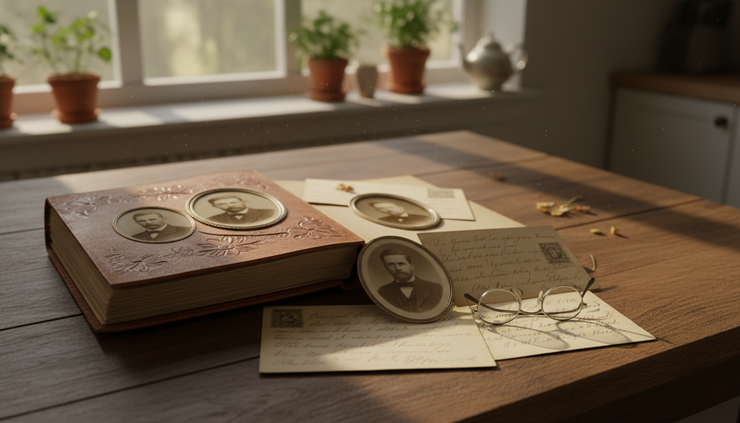
Ancestry gives identity more depth
Identity is often described through the present: where someone lives, what they do, what they believe, and who they love. Ancestry adds another layer. It asks, “What came before this?”
That question can change how a person sees themselves.
A person might grow up knowing only a few basic facts about their background, then learn that a great-grandparent crossed an ocean alone, worked land in a new place, served in a local church, spoke a language that later generations forgot, or survived a period of upheaval. Those discoveries bring texture to identity. They turn vague labels into lived experience.
For example, it is one thing to say, “My family came from Mexico,” or “My grandparents were from Ireland,” or “My ancestors were part of the Great Migration.” It is another thing to learn names, dates, neighborhoods, occupations, faith practices, food traditions, and the reasons people moved. These details make heritage feel less abstract.
Ancestry can also reveal complexity. Many people come from more than one cultural, ethnic, religious, or geographic background. Some families carry stories of immigration. Others carry stories of enslavement, displacement, adoption, name changes, estrangement, or records that were never kept. For some, ancestry research brings joy. For others, it brings grief, anger, or unanswered questions.
Both responses are valid.
Knowing your ancestry does not lock you into one identity. It can give you a clearer view of the influences that shaped your family and, in some cases, the parts of yourself you may want to reclaim, question, or reinterpret.
Cultural heritage connects daily life to older traditions
Cultural heritage often lives in ordinary moments. It appears in food, music, prayers, sayings, crafts, clothing, land, celebrations, and the way elders tell stories. These practices may seem simple, but they often carry generations of meaning.
A bowl of soup made the same way every winter may reflect a region, a climate, a migration, or a memory of scarcity. A song sung at weddings may carry a language that no one in the family speaks fluently anymore. A holiday meal may reveal how relatives adapted old customs to life in a new place.
When people explore cultural heritage, they often discover that traditions are not frozen in time. They change as families move, marry, learn, struggle, and rebuild. A recipe may shift because one ingredient was unavailable in a new country. A surname may change because officials wrote it differently. A religious custom may blend with local practice. A family may preserve one tradition while letting another fade.
That does not make the tradition less real. It makes it human.
Heritage also helps explain values. A family that prizes education may carry memories of relatives who were denied schooling. A family that values hospitality may come from a culture where sharing food was a moral duty. A family that stresses thrift may have lived through poverty, war, or economic loss. A family that values independence may descend from people who had to start over with little support.
These connections do not excuse harmful patterns, and they do not mean every value should be accepted without question. They do help explain where some values began.

Family stories shape values and emotional connection
Facts matter, but stories make ancestry personal.
Names on a record can tell you who lived where and when. Stories can tell you what they feared, celebrated, endured, and hoped for. A birth certificate may list a place. A grandparent may explain what that place smelled like after rain, which neighbor helped during hard times, or why the family left.
This is where family history becomes more than a timeline. It becomes a source of emotional connection.
Storytelling can preserve details that documents miss, such as:
What relatives called each other at home
Which songs, jokes, or sayings were common
How families handled hardship
What skills were passed from one generation to another
Which places felt sacred, safe, joyful, or painful
Why certain topics were avoided
Stories can also correct assumptions. Maybe a relative who seemed stern had lived through deep loss. Maybe a move that looked like an adventure was actually forced by lack of work or discrimination. Maybe a family rule that once felt strict came from a real need for safety.
When younger generations hear these stories, they gain more than information. They gain perspective. They may begin to see relatives as whole people rather than fixed roles such as “grandmother,” “uncle,” or “ancestor.”
That shift can soften judgment. It can deepen gratitude. It can also create space for honest conversations about pain, silence, and repair.
Not every family story is easy. Some include conflict, abandonment, racism, addiction, secrecy, or trauma. Exploring ancestry with care means making room for truth without reducing anyone to their worst moment. It also means respecting boundaries. Some relatives may not be ready to talk. Some records may be painful. Some discoveries may challenge a family’s most repeated stories.
Still, even hard truths can support a stronger identity. They show what was survived, what was lost, and what can be changed.
Knowing your roots can build belonging and community
One of the strongest benefits of knowing your roots is a deeper sense of belonging. Ancestry can remind a person that they did not appear out of nowhere. They are connected to people, places, struggles, and choices that came before them.
That sense of connection can be especially meaningful in a mobile society. Many families in the United States have moved across states or regions. Others have crossed borders, changed languages, or lost contact with extended relatives. People may grow up far from ancestral homelands or without a clear link to older family networks.
Ancestry can help rebuild those links.
A person researching genealogy might find cousins they never knew, visit a town where relatives once lived, or learn why their family settled in a certain region. Someone who grew up disconnected from a culture may start learning a language, cooking ancestral foods, attending community events, or asking elders to share memories.
Belonging can grow through small acts:
Calling a relative to ask about childhood memories
Labeling old photos so names are not lost
Visiting cemeteries, former homes, places of worship, or historic neighborhoods
Learning the meaning of a family name
Recording stories before they disappear
Sharing traditions with children in honest, age-appropriate ways
Community often follows connection. When people learn about their roots, they may also learn about larger histories. A family migration may connect to labor movements, wars, farming communities, Indigenous homelands, Black history, refugee experiences, religious communities, or neighborhood life. Personal ancestry becomes a doorway into shared history.
This can create empathy. Learning how one family navigated hardship can make the struggles of other families feel less distant. It can also encourage people to care for cultural memory, local history, and the stories of groups whose records were ignored or damaged.

How to begin exploring your ancestry
Ancestry research can feel large at first, but it usually starts with simple questions. The best first step is often a conversation.
Ask relatives what they remember. Start with open questions that invite stories rather than short answers.
Try questions like:
What do you know about where our family came from?
Who in the family told the best stories?
What traditions did you grow up with?
Were there foods, songs, prayers, or sayings that mattered?
Why did our family move from one place to another?
Are there stories people stopped telling?
Who should I talk to next?
Record the conversation if the person agrees. If not, take notes soon after. Details that seem small now may become valuable later.
Next, gather what already exists. Look for photo albums, letters, diaries, military papers, immigration documents, naturalization papers, newspaper clippings, family Bibles, school records, land records, obituaries, funeral programs, and handwritten recipe cards. Ask relatives before taking or scanning items, and keep copies organized with dates and names when possible.
Public records can help fill gaps. Census records, birth and death certificates, marriage records, cemetery listings, church records, passenger lists, and local archives may offer clues. Libraries, historical societies, and county offices can be useful starting points. Online databases can help too, though names are often misspelled and records can be incomplete.
As you research, keep a few principles in mind.
Write down sources. Future you will want to know where each detail came from.
Treat family lore with care. Stories may hold truth, but details can shift over time.
Expect surprises. Names, ages, birthplaces, and relationships may not match what you were told.
Respect living people. Do not share sensitive information without permission.
Make room for emotion. Discovery can bring pride, sadness, confusion, relief, or all of these at once.
Storytelling matters as much as research. A family tree can show relationships, but a story helps people feel why those relationships matter. Consider writing short profiles of ancestors, creating a photo book, recording audio interviews, or hosting a family story night. Children and younger relatives often connect more with a vivid story than with a chart.
For example, instead of saying, “Your great-grandmother was born in 1924,” tell what is known about her world. Where did she live? What work did she do? What did she cook? What did she survive? What did she teach others? Even a few details can bring a name to life.

The past does not define you, but it can guide you
Ancestry is not a script. No one has to repeat every tradition, accept every inherited belief, or feel tied to one version of the past. Identity remains active. People choose, change, question, and grow.
Yet knowing what came before can offer grounding. It can help explain family patterns. It can restore forgotten names. It can connect people to culture, place, and community. It can also show how much strength exists in ordinary lives.
The most meaningful ancestry work often begins with curiosity rather than certainty. Ask a question. Save a story. Label a photo. Cook a recipe. Visit a place. Listen to an elder. Share what you learn with care.
Roots are not only about the past. They help people stand more fully in the present, with a clearer sense of where they came from and what they may want to carry forward.


Comments