


How Ontario's Early Settlers Were Connected Through Faith and Land
The farther back an Ontario family tree reaches, the smaller the province begins to feel.
A surname that appears in one township record shows up again in a church register miles away. A witness at a baptism later turns out to have purchased land beside another family being researched. A cluster of names appears together in a petition, then again in a marriage register, then again on an early map.
At first, these repeated names can look like coincidence. After enough research, a pattern starts to form.
Many of Ontario’s founding settlers arrived between about 1770 and 1850. They came into a place with fewer roads, fewer communities, and far fewer people than we are used to imagining today. They often traveled in groups, worshiped in the same congregations, settled near people who shared their background, and bought land through the same local networks.
That means early Ontario families were not always connected by blood or marriage. Sometimes they were connected by faith, migration, land ownership, and proximity. For genealogists, those connections matter.
They can explain why the same surnames keep appearing, why families moved where they did, and why a record in one township may point to answers in another.
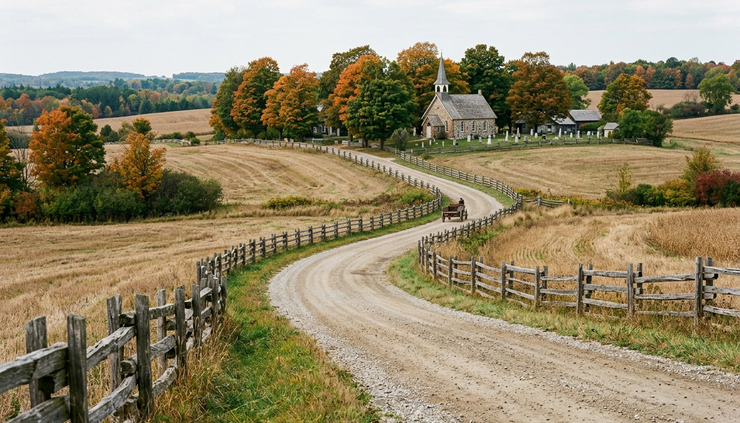
Early Ontario was built through clustered settlement
Ontario did not fill evenly. Settlement followed rivers, lakes, military routes, survey lines, and land policies. Families did not usually arrive, scatter randomly, and start over alone. They often settled near people they already knew or people who shared something familiar.
That shared connection might have been:
A place of origin
A religious denomination
Military service or Loyalist affiliation
A migration route
A land agent, minister, or local official
A language or cultural background
A previous settlement in the United States, Britain, Ireland, Scotland, or continental Europe
In early records, this clustering shows up again and again. A group of families appears in one township at roughly the same time. Their children are baptized in the same church. Their names appear near each other in land petitions or assessment rolls. Later, they witness each other’s marriages, serve as executors, or buy adjoining lots.
These links can exist even when no marriage connects the families.
A researcher might follow one household into a township and discover that four other families arrived around the same period, attended the same church, and purchased nearby land. Those families may not share a direct ancestor, but they still belonged to the same local world.
That world shaped choices.
A new settler needed information: where land was available, which lots had good soil, where the nearest mill stood, which road was passable, which minister served the area, and which neighbors could help raise a barn or clear a concession. Trusted networks carried that information.
Faith communities and land transactions became two of the strongest paper trails those networks left behind.
Faith communities created records and relationships
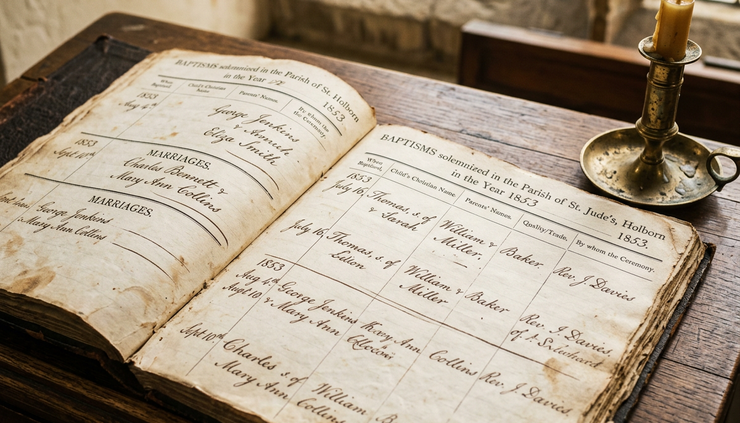
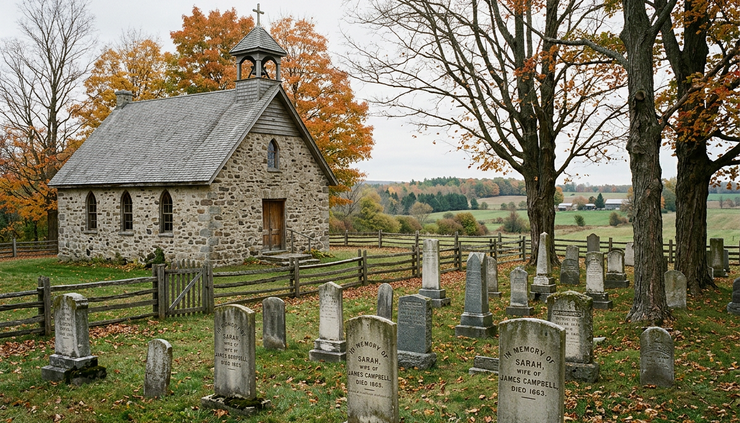
Churches were often among the earliest organized institutions in a settlement. Before consistent civil registration, religious records may be the only place where births, marriages, deaths, and family associations were written down.
That makes church registers more than lists of ceremonies. They are maps of community.
A baptism entry may name parents, sponsors, and a minister. A marriage record may include witnesses. A burial entry may place a person within a congregation even when no headstone survives. Membership lists, minutes, subscription lists, pew rentals, and cemetery records can all show who belonged to the same religious circle.
In early Ontario research, religious affiliation can explain why certain families keep appearing together. Anglican, Methodist, Presbyterian, Baptist, Quaker, Mennonite, Roman Catholic, and other communities often had distinct settlement patterns. Some congregations began in homes or barns before a church building existed. Ministers traveled circuits and served wide areas, linking families across township lines.
That matters because a family may appear “missing” from one place if the researcher looks only at the civil boundary. The church record might be in the next township, the county seat, or a neighboring settlement where the minister kept the register.
Faith did not just record family history. It connected families socially.
People worshiped together, chose marriage witnesses from the congregation, buried relatives in the same cemetery, and supported the same church building projects. They heard news through church networks. They met future spouses through them. They found neighbors through them.
For example, if several families appear in the same Methodist circuit records during the 1820s and then later purchase farms in nearby concessions, that is not random noise. It may show a network moving, worshiping, and settling together.
Land records show who settled beside whom
Land records are some of the most useful sources for understanding early Ontario connections. They can show when a person obtained land, where the lot was located, who owned nearby parcels, and how property moved through families or communities.
Early Ontario land can appear in several types of records, including petitions, grants, patent records, township maps, deeds, mortgages, and assessment rolls. Each type answers a different question.
A land petition may explain why someone applied for land. A patent may show when the Crown granted title. A deed may reveal a sale between neighbors or relatives. An assessment roll may show who occupied land, even before a formal title transfer appears elsewhere.
When studied together, these records can turn a list of names into a physical community.
Townships were often divided into concessions and lots. If two surnames appear repeatedly in church records, and then those same families appear on adjoining lots, the connection becomes stronger. If a third family serves as a witness in deeds for both households, another thread appears.
This is where genealogy becomes local history.
A family’s land was not just property. It placed them near particular roads, schools, mills, churches, cemeteries, and neighbors. Those nearby families were often the people who witnessed documents, married into later generations, shared labor, and appeared in disputes or estate files.
Land also explains surname repetition.
In a smaller settlement, several branches of the same surname might occupy neighboring lots. Some may be related. Others may only share an origin or denomination. A name that looks uncommon today may have been common within one religious or ethnic settlement. By contrast, a familiar surname can send researchers down the wrong path if they assume every person with that name belongs to the same family.
The better approach is to ask: Where did this person live, who lived around them, and which records connect them to that place?

Arrival patterns made the same surnames appear again
Between about 1770 and 1850, many settlers arrived in waves. Some came after the American Revolution. Some came from Britain and Ireland during periods of economic pressure. Others moved north from earlier communities across the border. Some families relocated within Ontario as new land opened.
These arrivals were not isolated events. Families often followed earlier neighbors or kin. Letters, church ties, military connections, and word of mouth helped shape migration choices.
A person might settle in a township because:
A sibling or cousin had already claimed land nearby
A minister served a congregation from the same tradition
A land agent promoted settlement in the area
Former neighbors had moved there first
The land was available along a familiar route
A community already spoke the same language or followed the same customs
Once several families from the same background settled in one area, more often followed. That created surname clusters that can still be seen in old maps, cemetery stones, and church books.
This also explains why a researcher may encounter the same group of names across different client projects. The families may not be related in a direct line, but they belonged to the same settlement network. They arrived in the same era, attended the same churches, bought land in the same townships, and appeared in each other’s records.
That realization changes the way early Ontario research works.
Instead of treating each surname as a separate path, it helps to study the group. Genealogists often call this cluster research or the “FAN” principle, which looks at friends, associates, and neighbors. The name is modern, but the method fits early Ontario perfectly.
If one family left few records, another family in the cluster may have left more. A neighbor’s deed may mention a boundary. A church witness may point to a married sister. A land petition from one settler may describe a migration pattern shared by several households.
The answer to one family’s mystery may sit in another family’s paperwork.
The strongest clues appear when faith and land overlap
Faith records and land records are useful on their own. They become much more powerful when they point to the same group of people.
Imagine these clues:
A baptism record names a child’s sponsors. A township map shows those sponsors living two lots away. A deed shows one of them witnessing a sale. A cemetery record places both families in the same burial ground. A marriage record later joins the next generation of one family to a neighbor from the same concession.
No single record proves a broad community connection. Together, they create a pattern that is hard to ignore.
This is especially helpful when dealing with common problems in early Ontario research:
Repeated given names within the same family
Several people with the same surname in one township
Missing birth or marriage records
Boundary changes between counties or districts
Ministers serving more than one congregation
Delayed land registration
Families moving before appearing in census records
The overlap of church and land can sort out people who would otherwise blend together.
For example, two men with the same name may appear in the same county. One attended a Presbyterian congregation and lived on one concession. The other appears in Methodist records and owned land in another township. Their names match, but their networks differ. That difference can prevent a wrong connection.
The same method can also reveal hidden relationships. If a widow sells land to a man who later appears as guardian to her children, and both families share a church, the connection deserves closer study. It may point to kinship, but even if it does not, it shows trust and association.
How to read early Ontario records as a community story
A narrow search can answer narrow questions. A wider search can explain the world around a family.
When the same surnames keep appearing, it helps to slow down and place them into context. Look beyond direct ancestors and build a small community profile around them.
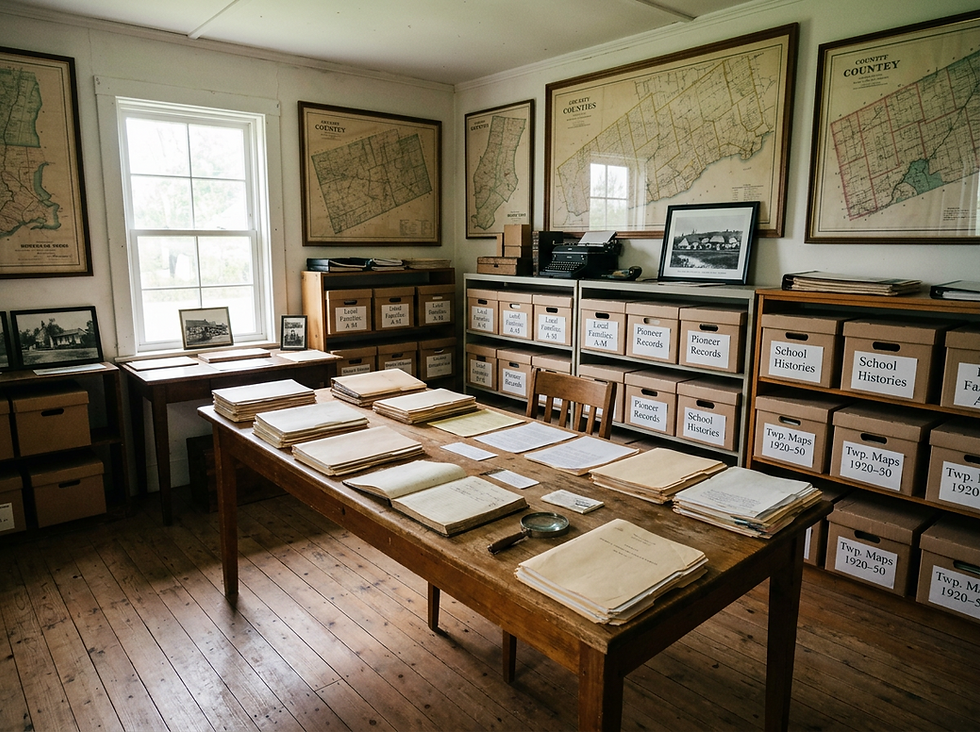
Start with a timeline. List each known event for the family: arrival, land petition, marriage, child’s baptism, census entry, tax or assessment record, deed, death, burial, and estate file. Then add the names of witnesses, neighbors, sponsors, ministers, and adjoining landowners.
Next, map the places. Township names matter, but concessions and lot numbers matter even more. A family in the same township may still have lived far away. A family across a township line may have been close enough to attend the same church or mill.
Then compare religious records. Search nearby congregations, not just the one that seems most likely. Many families changed churches, attended the nearest available service, or used a traveling minister before a local congregation formed.
It also helps to track surnames across record types. If a name appears in land records, church records, cemetery records, and as a witness in deeds, that person likely held a real place in the family’s circle.
The goal is not to force every repeated surname into the family tree. Some connections are social, legal, religious, or geographic rather than biological. Those connections still matter because they explain how the family lived and where to search next.
A simple research table can keep the clues organized.
Record type | What it may reveal | Why it matters |
Church register | Baptisms, marriages, burials, witnesses, sponsors | Shows faith community and close associates |
Land petition | Arrival, status, request for land, sometimes origin | Places a settler in a migration and settlement pattern |
Deed or transaction | Buyers, sellers, witnesses, neighbors | Reveals trust networks and property movement |
Assessment roll | Occupants, property value, livestock or acreage | Shows who lived in a place during a given year |
Cemetery record | Burial location, family groupings, dates | Connects households across generations |
This kind of work takes patience, but it often breaks open older lines. It also makes the family story more honest. Ancestors did not live as isolated names on a chart. They lived among people whose choices shaped their own.
Why these connections still matter
Early Ontario research keeps reminding us that family history is never only about one family.
A surname in a church register, a lot number in a deed, or a witness on a marriage record can lead to a wider circle. That circle may include relatives, but it can also include neighbors, fellow worshipers, land partners, migrants from the same place, and families who simply trusted each other enough to build a life nearby.
For those researching Ontario’s early settlers, the repeated names are not clutter. They are clues.
The next time the same surname appears in a different client file, a neighboring township, or beside another land transaction, it may be more than coincidence. It may be evidence of the networks that built early Ontario: small congregations, shared migration paths, adjoining farms, and communities tied together by faith and land.
The deeper the research goes, the clearer it becomes. These families were connected, even when the connection was not written as a marriage or a birth.
Sometimes the strongest link is the place they chose, the church they attended, and the land they worked side by side.

Comments